Cricket Stadium vs. Village Cricket Club Wedding: Which Venue Suits You?
Picture two weddings on the same Saturday. At the first, your guests arrive through a players' entrance, walk past the home dressing room and sit in a stand that usually holds thousands. At the second, you marry beside a pavilion that smells faintly of linseed oil, with a sightscreen behind the registrar and a stack of plastic chairs waiting to be shifted before the ceilidh.
Both are cricket weddings. They cost different amounts, ask different things of your guests, and produce very different photographs. Neither is better than the other. The question is which set of trade-offs fits your guest list, your budget and the day you actually want.
What You Are Really Paying For
A stadium or county ground looks expensive on the headline hire fee, but the bigger numbers often sit underneath it: a minimum catering spend, security and steward costs, cleaning, event insurance, and a supplier list you cannot move beyond. You may be handed a strict load-in window, told exactly where a truck can and cannot park, and asked to use the in-house bar. In exchange, you get staff who do this every week, proper kitchens, power that never trips, and toilets nobody has to think about.
A village club is the reverse. The hire fee can be remarkably reasonable, sometimes a few hundred pounds for the weekend, because the club wants the income. Your money might pay for new netting or a working boiler, which feels good. But the marquee, flooring, generator, portable toilets, water supply, lighting, parking marshals, extra insurance and the Monday morning cleanup all land on your side of the ledger.
Do the arithmetic properly before you fall in love with either. Ask for a written quote that lists what is included, what is extra, and what the deposit and cancellation terms are. A cheap hire with a long list of add-ons is not a cheap wedding.
Capacity and the Empty Row Problem
Stadium spaces come in several sizes: hospitality boxes for twenty to a hundred, function rooms for a few hundred, and pitchside marquees that can hold far more. The trap is scale. Eighty guests in a room built for five hundred feels like a wake, not a wedding. Ask about partitioning, draping or moving to a smaller room if your numbers are modest.
The question worth asking at either venue
"If we come in at the lower end of your capacity, how will you dress the space so it does not look half-empty?" A good venue manager has an answer ready. A vague one tells you plenty.
At club level, a pavilion might seat fifty to eighty comfortably, and a marquee on the outfield can take a hundred and fifty or more. Check whether the marquee goes up on the square itself (usually forbidden) or well away from the playing block, and whether the outfield is firm enough in your month.
Atmosphere: Theatre or the Village Green
Stadium weddings feel like an event. Floodlights, a tunnel walk-in, big screens showing your photos, the sense of being somewhere that matters. The downside is acoustics: hard concrete and steel send a DJ's bass bouncing around, and a small crowd can sound lost. Ask whether a sound limiter is fitted and where the speakers can go.
Village greens do warmth instead. Children run along the boundary, a dog steals a sausage, guests wander between the marquee and the scorebox, and nobody needs a seating plan to find a conversation. The trade is less spectacle and more weather risk.
Match the venue to the energy you already have, not the energy you hope to generate on the day.
Think about your actual guests. If half of them are travelling and expecting a proper party, the stadium setting gives them a story. If your crowd is family, neighbours and the Saturday team, the club will feel like home.
Access, Travel and Accessibility
Stadiums usually sit on transport routes, with car parks, lifts, step-free entrances, accessible toilets and hotels nearby. That matters more than most couples admit, especially with elderly relatives or guests who do not drive.
Village clubs are often at the end of a single-track lane with no lighting. Gravel, grass and a step into the pavilion can be genuinely difficult for a wheelchair or a guest with a walking stick, and taxis may not want the return trip. A minibus from the nearest town solves a lot of problems and costs far less than a taxi queue.
- Walk the route: from the car park to the ceremony spot, in the shoes your oldest guest will wear.
- Ask about toilets: how many, where, and whether there is an accessible option.
- Check the last mile: lighting, signage, mobile signal and whether drivers can find it in the dark.
- Confirm insurance and licensing: who holds the public liability cover, and what the venue requires from you.
Vendor Rules, Catering and Decorating Freedom
At a stadium
Expect an approved caterer, restrictions on open flames, candles, confetti, sparklers and anything fixed to walls, plus rules about rigging and load-in times. Some grounds are protective of the pitch and sightlines, and reasonably so. You gain reliability; you lose improvisation.
At a club
You can often bring your own caterer, book a street food van, run a curry night, or rope in relatives. Decoration is limited mainly by your imagination and the power supply. Check what the kitchen actually offers: a kettle, an urn and a fridge are common.
Alcohol is where club weddings need care. In many places you need a licence or a temporary event notice to sell drinks or host late music, and the rules differ by country and region. Speak to the club committee, your local licensing authority and your insurer early, and take proper advice rather than relying on what a friend did at their venue.
Weather, Light and Timing
A stadium is largely weather-proof, which removes an entire category of stress. A village green is not. If you go the club route, budget for a floored marquee, a generator with capacity to spare, a covered walkway between pavilion and tent, and a plan for moving the ceremony indoors at short notice. Ask the groundsman when the outfield is usually driest, and avoid the weeks when the square is being prepared.
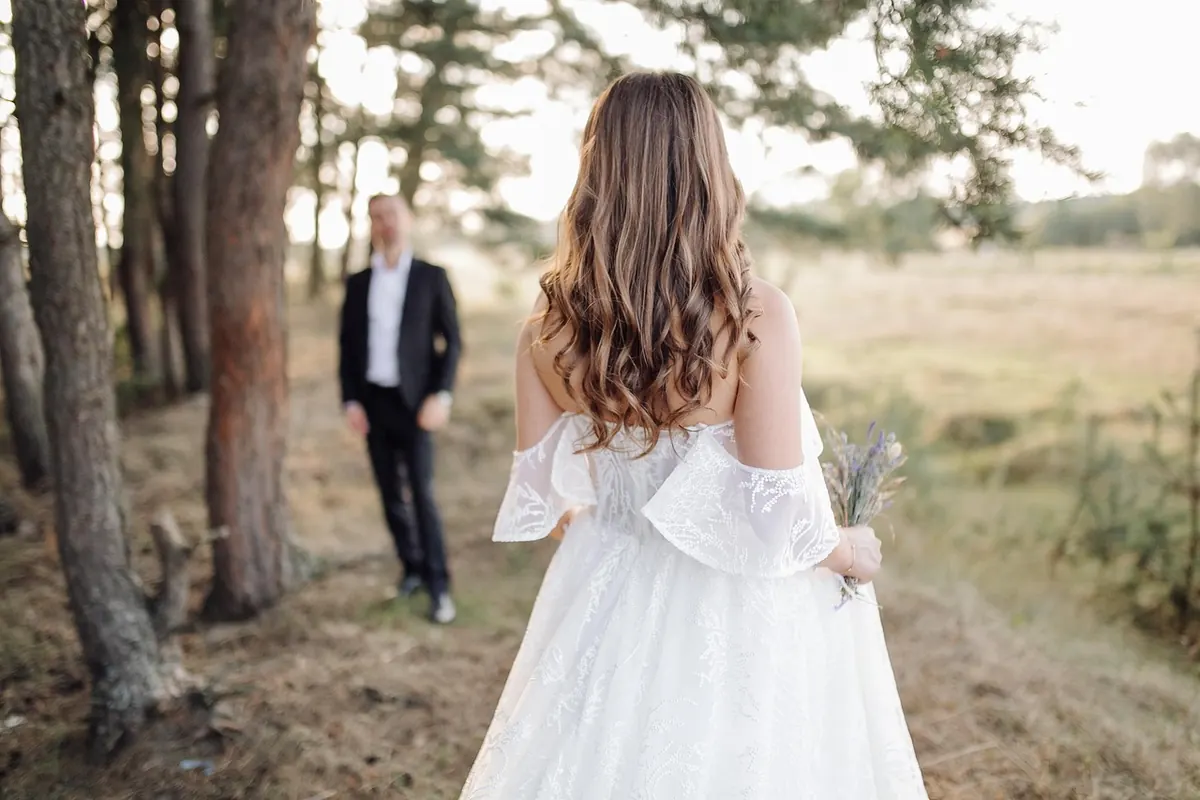
Light is the hidden advantage of the club. Long summer evenings on a village green give you golden photographs and a relaxed drift from ceremony to first dance. Stadium floodlights give you something more dramatic, but check the curfew for music and the time the lights go off. Both venues usually have a hard stop, and it is better to know it now than at 11pm.
Choosing Between Them
- Write your guest number first, then your honest total budget. Both venues look different once those two numbers exist.
- Visit at the time of day you will marry, not at a convenient Tuesday lunchtime.
- Get full written costs from each, including everything you would have to hire in.
- Ask the club what the money would fund, and ask the stadium what happens if it rains, if you are late, or if you want a supplier off their list.
- Choose the one where your least confident guest would feel comfortable.
If you want a day that runs itself, with covered space and staff who have seen every problem before, book the stadium. If you want a day that feels like your own, with room to cook, decorate and stay up late under a marquee, book the club. Whichever you pick, put the agreement and the money in writing, and keep one rainy-day plan in your back pocket.
Photo: 652234 / Pixabay